Thursday, May 07, 2009

Wall Street and Fed Just Don't Get It - Friedman's Tantrum


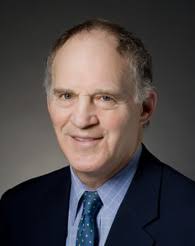
In a classic Wall Street temper tantrum, Stephen Friedman stepped down from his role as Chairman of the Federal Reserve Bank of New York's board of directors after a Wall Street Journal article called into question his ownership of stock in Goldman Sachs.

In his resignation letter Friedman states "Although I have been in compliance with the rules, my public service motivated continuation on the Reserve Bank Board is being mischaracterized as improper."

So what is the story?

Friedman owned stock in Goldman Sachs (he was the former Chief over there) when everything melted down last year and when Goldman Sachs applied to become a bank holding company and for bailout money Friedman was one of the people who had influence or decision making power.

I am not saying that because of his ownership in the stock that he was or is guilty of anything, but the fact that he was a shareholder should immediately be cause for him to be removed from any decision making authority or influence he might have on the transaction. Instead, he kept his position as Chairman and added to his Goldman Sachs stock position in December 2008 and January 2009 (without disclosing to this to the Federal Reserve, which he wasn't required to do).

His defense is that he complied with all the rules. He just doesn't get it.

The right thing to do is not just to comply with rules, but to ensure the soundness of the decisions being made and to make sure those decisions are untainted by conflicts. His ownership of the stock should have prompted him to immediate resign. His resignation would not have caused concern and in fact his reputation would be intact as it would have been the right thing to do. Now he has cast a shadow on himself as he continued to buy up stock in an entity that he had regulatory influence over.

This is the problem with Wall Street, they don't get that just because something is legal it doesn't mean its ethical. Owning the stock may not have changed his decisions, but the taint is there and whether or not he made decisions based on sound judgement doesn't matter - he owned the stock, his decisions are tainted even if they were the right ones.

We deserve better than this from our leaders. The arguement is that Friedman was the ONLY one who could do the job.....so he was given a waiver....give me a break. The same logic was used to hire Timothy Geithner who clearly was not honest on his taxes - does anyone really believed things could have been any worse if perhaps someone other than Geithner was chosen as Treasury Secretary?

The article didn't identify Friedman as a Republican or Democrat and it doesn't matter - ethics are ethics and this guy breached them and should resign. He shouldn't be throwing a tantrum and blaming the Wall Street Journal for exposing his stock issues - he should be thanking them for the transparency they've provided (okay, I realize how funny that sounds).

I don't know if Friedman's stock ownership in Goldman influenced his decisions and frankly don't care, what bothers me is that he doesn't get it that the conflict was big enough that he should have resigned out of ethical responsibility.

Scott Dauenhauer CFP, MSFP, AIF

Banks Need Fewer Carrots and More Sticks


This is an interesting opinion piece by Glenn Hubbard, he offers a way to deal with the "bad assets". Its a reasonable plan and one that the FDIC has been utilizing for decades. At its core is the idea of splitting the bad assets from the good - essentially creating two banks where one existed - one bank gets the good assets, the other the bad assets. The bond holders and creditors are on the hook for the losses of the bad bank and in exchange receive significant equity ownership in the good bank.

This is essentially a combination of many of the ideas put forth on this blog (and others) over the past six months as it acknowledges that purchasing toxic assets is a bad idea as no price can be found and the discovery process is fraught with peril. Instead, no price is given to the assets - as those assets are worked out or sold off the gains or losses are absorbed first by the creditors.

I like this idea, though it requires legislation (thus another opportunity for congress to gouge us with pork).

The issue I have is that it still isn't a comprehensive plan for dealing with the bad underlying collateral that is literally owned by thousands of institutions. These pieces have to be put back together in order to deal with the collateral, or legislation has to be passed to allow this collateral to be dealt with (which will piss somebody off).

It also does not deal with Fannie and Freddie, who have been ignored but are completely insolvent institutions in need of bailouts for as far as the eye can see.

Until the underlying collateral is dealt with we will continue to have a difficult financial system.

Scott Dauenhauer CFP, MSFP, AIF

Insolvent banks should feel market discipline


Roubini and Richardson argue that the stress tests are basically a farce (which I agree) and that institutions that make bad decisions should be punished. Bond holders failed to oversee the risk being taken and should be on the hook for losses before the taxpayer.

This is nothing new and what I've been saying for months (as has Hussman).

It seems that we are starting to become complacent as things have apparently improved (read: volatility has decreased at least on the downside) and this complacency will lead to further problems as our current ones are not addressed and worked out in a meaningful way.

Scott Dauenhauer CFP, MSFP, AIF
www.meridianwealth.com

Wednesday, May 06, 2009

Mark-to-Market Rally? An Engineered Crisis?


The linked to the article above came out on March 12th. The market hit its bottom on March 9th. Its probable that the people at the FASB and SEC started leaking rumor of the relaxation of Mark-to-Market rules, formally known as FASB 157e a few days before this article was released and before the congressional testimony. Is it a coincidence that since the leaks started the S & P 500 has gone from 672 to over 900 (closing today at 919)?

I don't know, but I find it interesting that for months the call to relax Mark-to-Market had gone on for months and as soon as that relaxation looked to be a reality the market rallied by 37%.

I'm not passing judgement on Mark-to-Market, I actually think it serves some uses, but perhaps this crisis (though real) was partially manufactured by overly stringent accounting rules.

Here is an excerpt from Brian Wesbury and Robert Stein:

"The history seems clear. Mark-to-market accounting existed in the Great Depression, and according to Milton Friedman, who wrote about it just 30 years after the fact, it was responsible for the failure of many banks.

Franklin Roosevelt suspended it in 1938, and between then and 2007 there were no panics or depressions. But when FASB 157, a statement from the Federal Accounting Standards Board, went into effect in 2007, reintroducing mark-to-market accounting, look what happened.

Two things are absolutely essential when fixing financial market problems: time and growth. Time to work things out and growth to make working those things out easier. Mark-to-market accounting takes both of these away.

Because these accounting rules force banks to write off losses before they even happen, we lose time. This happens because markets are forward looking. For example, the price of many securitized mortgage pools is well below their value, based on cash flows. In other words, the market is pricing in more losses than have actually, or may ever, occur. The accounting rules force banks to take artificial hits to capital without reference to the actual performance of loans.

And this affects growth. By wiping out capital, so-called "fair value" accounting rules undermine the banking system, increase the odds of asset fire sales and make markets even less liquid. As this happened in 2008, investment banks failed, and the government proposed bailouts. This drove prices down even further, which hurt the economy. And now as growth suffers, bad loans multiply. It's a vicious downward spiral.

In the 1980s and 1990s, there were at least as many, and probably more, bad loans in the banking system as a share of the economy. The difference was that there was no mark-to-market accounting. This gave banks time to work through the problems. At the same time, the U.S. cut marginal tax rates and raised interest rates, which helped lift economic growth. Time and growth allowed those major banking problems to be absorbed, even though roughly 3,000 banks failed, without creating an economic catastrophe."

Was this crash caused by mark-to-market

Friday, May 01, 2009

Book Review: House of Cards


House of Cards, A Tale of Hubris and Wretched Excess on Wall Street By William Cohan

If you loved Den of Thieves and Barbarians at the Gate, you'll find this "Bear Stearns collapse" book to be a interesting ride down Wall Street's rabbit hole. The title is not exactly what the book was about though. I was expecting more details about how the firm and the nation got itself into the current mess, instead it was a documentary of the leadership of Bear Stearns and how there firm got railroaded by Wall Street. Honestly, the author wants you to believe that you are supposed to be mad at these people while portraying them in a light that makes you almost want to root for them - strange for a book about Hubris.

I enjoyed the book, but it wasn't what I was looking for NOW. I was looking for something relevant to what is happening today, this book isn't. It is however a good read and there were many times when I was reading that I thought to myself - these guys are idiots.

What struck me the most was the fact that you could have (and probably still do) Wall Street CEO's who have no idea about the risk that is being taken or even how to understand the risk. These guys didn't even know Bond basics yet they were leveraged 50 - 1 in the worst type of bonds. On page 421, the CEO (at this point only Chairman) Jimmy Cayne was referred to as "had no idea what we did for a living in fixed income...unlike Alan (current CEO), who didn't get and knew he didn't get it and tried, Jimmy had no clue." Going on, one of the traders in Fixed Income commented about the current CEO, "But it was like Bonds 101, You're starting with 'Prices go up, yields go down. ANd how do you calculate duration?' This is unbelievable. The people at the top who are supposed to be in charge don't have a clue as to what is going on in the firm. I don't expect a CEO to micro-manage, however I do expect them to understand how a product that makes up 40% of the firms profit actually works.

One of the most interesting incites of the book was how the Federal Reserve responded to each failure (Bear and Lehman). In both cases they ended up providing the needed liquidity to other firms that would have kept both in business and given both enough time for an orderly wind down. Literally the Fed came out with the programs at the last moment, the apex where the firms had no other options and the fed told them when the firms asked to be part of the programs "Yeah, we're doing that for everybody else but you. We're going let you guys go."

I'm not one to support government bailouts - but if you're going to provide liquidity to firms that have junk for assets, it should be done for all firms that have junk for assets, making an example of Lehman turned out to bite the Fed and the Treasury. Of course the Treasury secretary came from Goldman Sachs and I'm willing to bet had a smirk on his face when Lehman had to file (Paulson was trying to force Lehman into a Chapter 7 liquidation which would have put 10,000 people out of work, Lehman pushed for a Chapter 11 and was able to save many of those jobs).

The bottomline of this book is that Wall Street is full of characters and there is a lot of history between them all, the one thing they all have in common is that they apparently don't have a clue. This isn't to say they aren't smart - most are brilliant, some geniuses (try reading When Genius Failed, by Roger Lowenstein), but most of them don't have a clue (at the top at least).

House of Cards is a good read, but if you're looking to learn about the current crisis, how it started and how to solve it, this is not your book.

Scott Dauenhauer CFP, MSFP, AIF