Tuesday, July 21, 2009

The Panic is Over, The Crisis is Not


With the S & P 500 up nearly 40% from its March lows and volatility way down, it appears the Panic of 08-09 is over (or at least in hibernation), however the crisis is not over and there is no real light at the end of the tunnel - despite what you hear. Don't get me wrong, we very well may have a recovery that appears to be real and solid over the next 18 months, but don't be fooled, the underlying structure is such that it can only be temporary.

I am not pessismistic on America in the long run, but for the short-term I remain uneasy. The basic structure of our system is in peril, though it is masked by government bailouts and more importantly - accounting rules. How a company like Citibank can be allowed to continue operations is beyond comprehension. To be clear, the structural underpinnings I'm referring to are almost all debt-based. Our country as a whole is consumed by debt, from the consumer to the government and unless and until that issue is resolved, we will continue to put our economic future in peril.

Last October the United States was held hostage by Hank Paulson (at Treasury), a gun was put to our head and we were told that if we don't spend a trillion dollars on "toxic assets" the world will fall apart. The Congress and the President acquiesced and gave the Treasury the money, much of which has been spent (yet no one knows quite where) and none of it to buy "toxic assets". Kind of funny that the world didn't fall apart, it did fall off a cliff in October, but perhaps that had something to do with the fear that was instilled in everybody - psychology drives markets.

The funny thing is that Paulson had it right, "toxic assets" were a problem, but buying them was impossible and he had to have known that from the beginning - the only thing that could temporary stop the toxic asset problem was a change in accounting rules (which for some reason didn't come till the end of March). The accounting rules changes finally went through and this has covered up the problems, instead of actually dealing with them. It seems the course of action to be taken with the toxic assets is to simply wait them out and hope banks can "earn their way out" of the crisis. I don't think the financial institutions can earn their way out this (I include the GSE's - Fannie and Freddie) as the potential losses are astronomical.

Banks have written down about $400 billion (see Seeking Alpha story), but they've raised over $300 billion in capital. On the surface, this sounds great, the banks will basically make up their losses by raising more money and earning enough profits to get them out of the mess. This will work for some banks, but not all and not for the financial system (GSE's included) as a whole.

Why am I so sure? I happen to live in one of the hardest hit area code's in the country (Murrieta, 92563) in terms of Real Estate price crashes. My house has an original Tax Assessment base of $521,000 and a similar home two doors down just sold at auction three weeks ago for $190,000. Ignoring the bogus appraisal I got in 2007 for $555,000, my house has dropped in value by about 60% (50% if you solely use tax assessor data). That is a huge and unprecedented drop in value. Neighbors are starting to wonder wether its just best to leave, this is a dangerous psychology.

The next wave of foreclosures is going to be crushing and this represents a major systemic problem to our financial system. Imagine putting 50% down on your home and still being underwater substantially. When good credit and large down payment buyers have substantial incentive to walk away, there is going to be problems. Within a one mile radius of my house (according to RealtyTrac) there are 190 homes in some stage of foreclosure, another 102 that are bank-owned and 34 homes for resale. This doesn't count the people who are now making payments but haven't been placed into the "pre-foreclosure" category yet.
While this may be an extreme, its not uncommon in many parts of California, Nevada, Arizona and Florida - if not dealt with it, it will spread (it already is).

My point, the panic appears to be over (but could easily return), but the crisis is not even close to being over.

Scott Dauenhauer CFP, MSFP, AIF
www.meridianwealth.com

Monday, July 20, 2009

Equastone Issues - Why I Passed Several Years Ago

(A Wall Street Journal article appeared today that talks about the Atlanta, Georgia Equitable building foreclosure - involving Equastone).

Several years ago I was turned onto a real-estate company in La Jolla (San Diego area) by the name of Equastone. A few people I know invested their client money with the firm and had good things to say about them. I like the idea of investing in commercial real estate directly, if it can be done on a reasonable basis and thought it would add some diversification to client portfolios. So I decided to do some due diligence.

I went down to La Jolla, had a nice lunch with the owners and sales people (my first red flag was that one of the owners would actually have lunch with me, a relatively small advisory firm owner). The pitch was straight-forward, they bought properties that they thought were distressed, but had the potential to be turned around, filled with occupants and then sold. The strategy seemed reasonable, assuming it could be executed correctly.

However, the more I found out the more I decided it wasn't for me, or my clients. A few of the red flags that stood out for me might not have made others list, but here they are:

1.) One of the guys in charge of determining "good" value started bragging about his amazing shoe purchase, he told me that he got these great shoes at an amazing value of just under $300 a pair and decided he'd stock up. For me, $300 doesn't appear to be a great value for shoes (of course I don't put much value in shoes, thus perhaps my problem). However, the guy started using his shoe analogy to demonstrate how great he was at spotting real-estate values.......hmmm, perhaps he suffers from over-confidence. This was a red flag, his value quotient wasn't the same as mine.

2.) Leverage. All the properties were highly leveraged, usually in the 70 -80% range or more (according to them and recent reports). I didn't like the large leverage. I'm fine with a little leverage, but anything over 50% gets me nervous - especially if the financing is short term in nature. Clients can make a ton of money, but they can also quickly lose it all.

3.) The company offered to let my clients in on the current offering at the original offering price, even though they claimed the purchases were already showing profits of 20 - 40%. What this told me was they were willing to throw their current clients under the bus to get new clients. I knew that this meant either that they didn't have the returns they claimed or that my clients would soon be diluted by new investors - or worse, the whole thing was a Ponzi.

4.) I was told that no one who had examined their books had ever failed to invest with them.....being the contrarian that I am I thought this was weird and wanted to NOT invest just to be the first! Having said that, it struck me funny that not a single person ever declined.....that was a red flag.

I decided not to invest with Equastone, perhaps leaving huge upside on the table for my clients. However, time has vindicated that decision as Equastone (according to the linked article and today's Wall Street Journal) is having big problems with their properties. Even the sales guy I spoke with at Equastone has left the company (though I don't know why). Who knows, perhaps the offering that I was to buy for my clients is performing well.......but it just didn't pass the smell test. I think my clients are much better off.

Scott Dauenhauer CFP, MSFP, AIF
www.meridianwealth.com

Friday, July 17, 2009

Markman: The U.S. China Ponzi Scheme


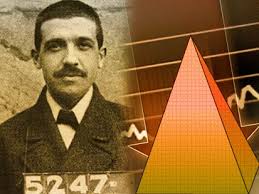
The picture is of Charles Ponzi,from whom we get the name "Ponzi" scheme. Jon Markman writes a very insightful article linked to above that shows the disturbing linkage between the US and Chinese economy. While this articles attacks a tough subject, it does so in an easy to understand and readable format and shouldn't take you more than five minutes to read - you should read it.

From the article:

"The credit is good only so long as China keeps recycling funds through the Ponzi scheme. But if Beijing leaders ever decide that it's just too risky to own U.S. dollars and debt, then the system is going to come crashing down. Of course, it is not really in China's interest to stop the scheme, even if it wanted to, because its own economy would likewise blow up."

Scott Dauenhauer CFP, MSFP, AIF
www.meridianwealth.com
Thursday, July 16, 2009

CBO Director: "Federal Budget....Unsustainable"


"Under current law, the federal budget is on an unsustainable path, because federal debt will continue to grow much faster than the economy over the long run. Although great uncertainty surrounds long-term fiscal projections, rising costs for health care and the aging of the population will cause federal spending to increase rapidly under any plausible scenario for current law. Unless revenues increase just as rapidly, the rise in spending will produce growing budget deficits. Large budget deficits would reduce national saving, leading to more borrowing from abroad and less domestic investment, which in turn would depress economic growth in the United States. Over time, accumulating debt would cause substantial harm to the economy."

Evidently the CBO Director didn't get the Biden memo (see: Biden: Spend To Avoid Bankruptcy).

Scott Dauenhauer CFP, MSFP, AIF
www.meridianwealth.com

Biden: Spend to Avoid Bankruptcy


I can just imagine the flak I'm going to get for this post, but.......come on, how could I resist?

Yes, Biden did say that if we don't spend on health care we will go broke......I guess ignoring the fact that it is medicare and medicaid that are already broke and such large liabilities that they basically make the U.S. insolvent on paper. Never mind the fact that we can't go bankrupt since we have the ability to print money endlessly (ignoring the consequences of that for now).

We have a $10 trillion on-the-book deficit slated to rise to around $20 trillion in a decade and this excludes the costs of medicare, medicaid and social security (okay, not totally, but the vast majority of the present value of the future liability is excluded from this figure). Does it make sense to spend even more money? Isn't that what got us into the financial crisis in the first place?

This type of fiscal irresponsibility is what sinks nations.

P.S. THIS IS NOT A STORY FROM THE ONION OR A HUMOR BREAK

Scott Dauenhauer CFP, MSFP, AIF
www.meridianwealth.com